
Pain Science for Rolfers® and Structural Integrators
An evidence-based framework for understanding how Rolfing® Structural Integration helps with pain
An advanced training for Rolfers® and Structural Integrators
Eight weeks of structured study—
paced for a working practitioner
Starts 27th October
Cost: $650
Yes, I’m interestedWATCH A VIDEO TRAILER FOR THE COURSE
Rolfers® work with pain. But how, exactly, does Rolfing® Structural Integration help?
Rolfers work in a way that may uniquely treat pain. But that uniqueness also makes it difficult to explain. When a client, a physician, or a colleague asks how Rolfing® Structural Integration works, you may reach for the familiar answers: fascial release, structural alignment, nervous system shifts, perceptual change. Each points to something real, but what does the evidence actually support, and how do the pieces fit into a coherent framework?
Over the past few decades, a revolution in pain science has transformed our understanding of how pain works.
This course places Rolfing® Structural Integration within that framework.
Across 8 weeks, you will:
- Examine the biological, psychological, and social factors that shape pain
- Investigate what the evidence supports
- Leave with practical tools for more effective approaches to pain management and recovery
What you will gain:
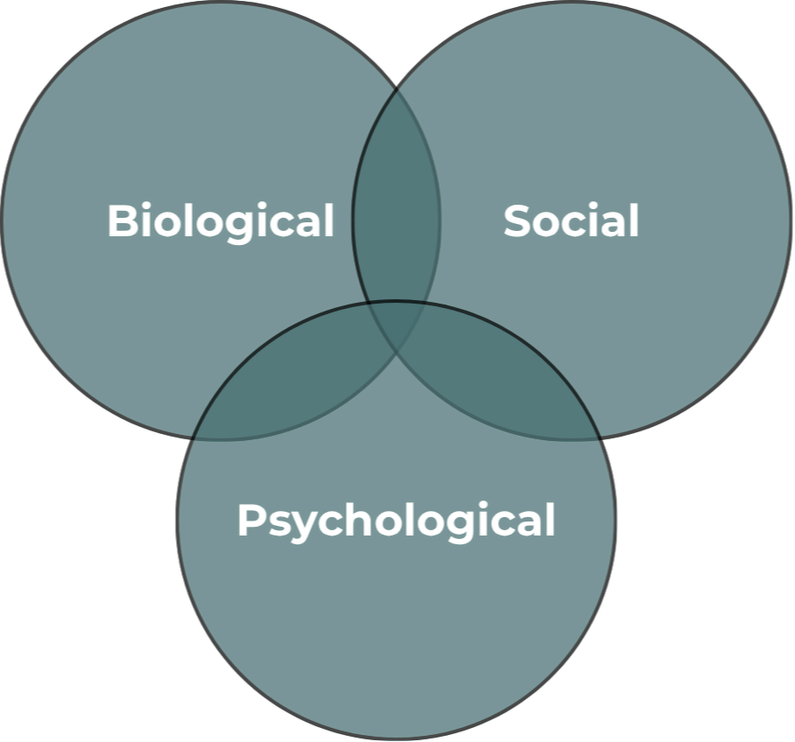
- A modern framework for thinking about pain. Move beyond outdated tissue-damage models to a biopsychosocial understanding grounded in current research.
- Clarity about what Rolfing might be doing. Examine the leading hypotheses for how Rolfing Structural Integration helps with pain, such as the contribution of fascia.
- Confidence in how you communicate. Talk about your work with clients, physicians, and colleagues using language that holds up to scrutiny.
- Practical tools for your sessions. Apply pain science to assessment, conversation, and treatment with clients living with pain.
Who is it for?
Certified Rolfers®, Structural Integrators and Rolf Movement™ Practitioners seeking a deeper understanding of how their work addresses pain
Rolfing® and Structural Integration students wanting to build their conceptual foundation early.
Fascia Therapists, Myofascial Release specialists and bodyworkers
No scientific background required. We build everything from the foundations up.
Course Curriculum
Module 1 — How we think about pain The cultural and scientific models that have shaped how pain is viewed and treated.
Module 2 — Understanding pain research How scientific knowledge is actually built, and why studying pain is uniquely difficult.
Module 3 — Posture and pain A careful look at one of the most enduring questions in our field: does poor posture cause pain?
Module 4 — What is pain? A modern definition of pain as a conscious, protective experience produced by the nervous system — not simply a signal from damaged tissue. Plus surprising findings about common pain conditions that challenge everyday assumptions.
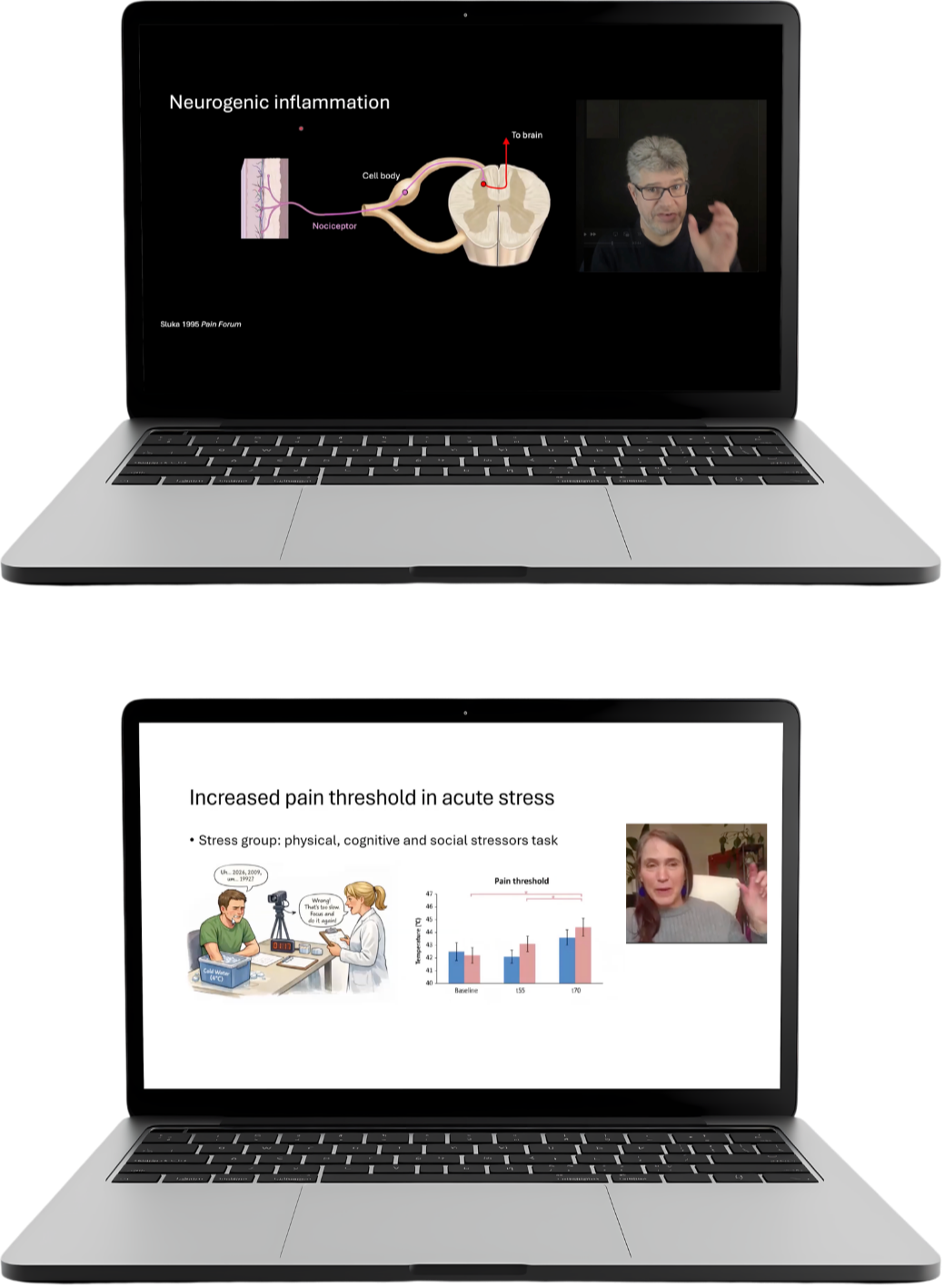
Module 5 — What influences pain? Demographics of pain across gender, race, age, place, and life experience. The biological, psychological, and social factors — including stress, attention, and social determinants of health — that interact to shape who experiences pain and how.
Module 6 — Physiological mechanisms How pain works across tissues, nerves, spinal cord, brain, and immune system — and what those mechanisms mean for clinical reasoning and treatment.
Module 7 — How pain becomes chronic Hypersensitivity and chronicity: the neural, spinal, brain, immune, and tissue changes that perpetuate pain — and how stress and learning drive the process.
Module 8 — Learning and pain A look at the role learning plays in pain and whether learning can facilitate or create barriers to recovery — and the implications for practitioners.
Module 9 — Sensorimotor disruptions Changes in postural tone, movement, and perception associated with chronic pain — and the complex, often counterintuitive question of what causes what.
Module 10 — Interventions Modern approaches to pain — from cognitive and psychological strategies to body-based methods — and why optimal care combines top-down and bottom-up. Plus a look at anti-inflammatory mechanisms.
Module 11 — Nonspecific factors The contextual ("nonspecific") factors that shape outcomes in any therapeutic interaction.
Module 12 — Fascia A deep dive on dense fascia and loose connective tissue — their role in proprioception, nociception, movement, and palpable sensation.
Module 13 — Rolfing Structural Integration and pain What current research supports about Rolfing and pain, possible mechanisms, and where Rolfing fits among emerging interventions.
Who we are
We're Tim and Mari—a neuroscientist and a pain specialist, both longtime somatic practitioners.
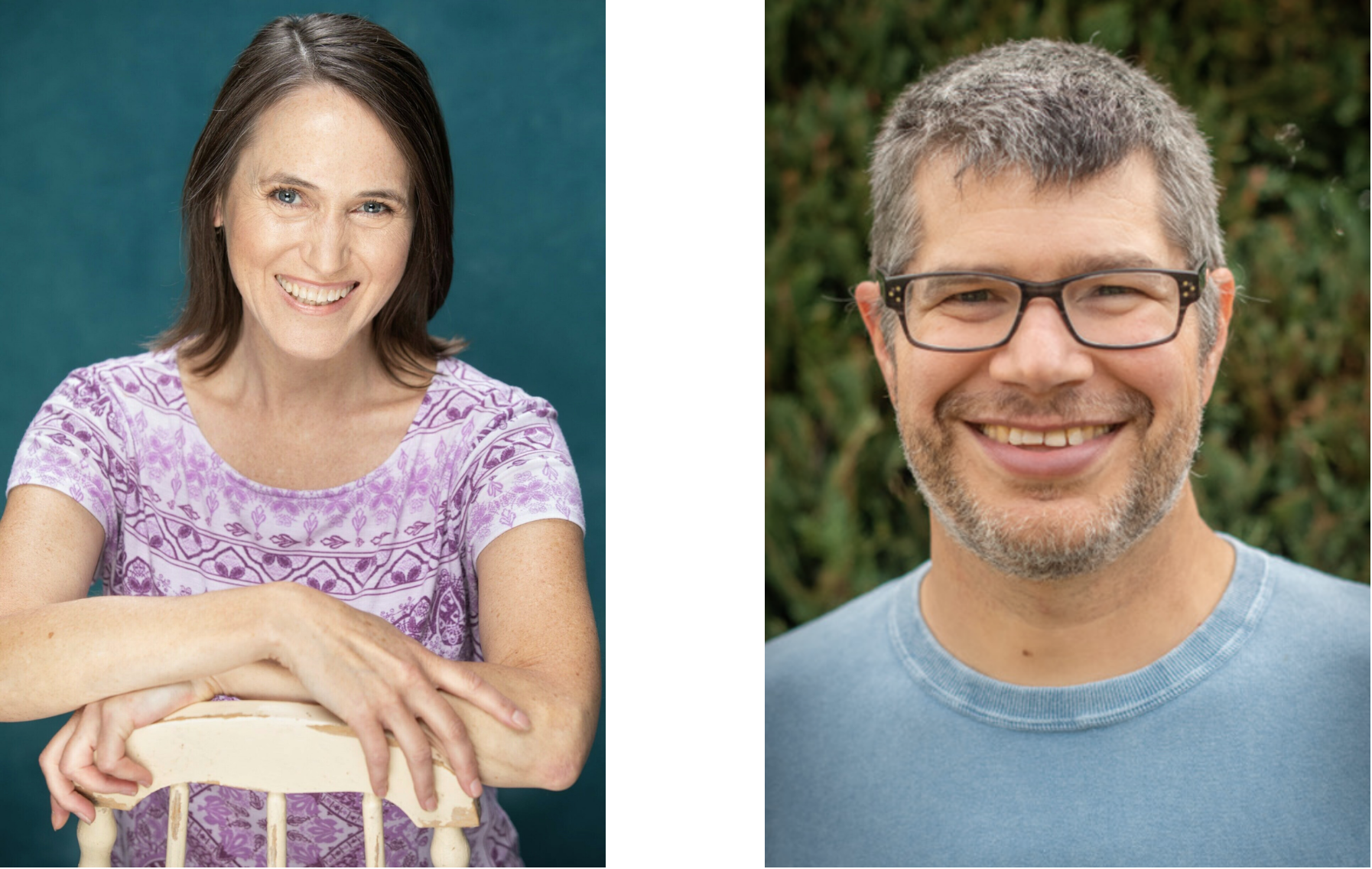
Our backgrounds combine decades of research and clinical practice. Tim Cacciatore, PhD, studies the neuroscience of postural tone and the mechanisms underlying somatic methods. Mari Hodges, MScMed, brings advanced training in pain management and years of clinical experience working with people in chronic pain. We're both certified Alexander Technique teachers, so we share a working understanding of hands-on practice with people who are hurting.
We built this course to bring modern pain science into dialogue with Rolfing, translating current research into a working framework that fits the realities of Structural Integration practice. It draws on the latest pain neuroscience alongside the practical experience that comes from years of teaching, treating, and learning from people in pain. To ensure the material accurately reflects the Rolfing perspective, we've developed this course in collaboration with certified Rolfer® and Rolfing® (Life Science) Instructor Jakob Reichardt.
In their own words

"I can’t recommend this course more highly. So much thought and effort has gone into creating an accessible introduction to such wide ranging subject matter. Best of all, they provide plenty of pointers if you’re wanting to explore further. Tim and Mari’s warmth and enthusiasm for the material, and for sharing their knowledge, made engaging what could otherwise have been a very arid journey. Now I’ve finished the course, I know I’ll miss the weekly sessions; even though that means no more getting up at 5.30am!"
Simon Fitzgibbon
"I cannot recommend this course highly enough. It is full of up-to-date information and is structured in a way that supports learning and encourages discussion. Tim and Mari have an impressive breadth and depth of knowledge in this area and both are excellent teachers. Thank you both very much. I came away with a much greater understanding about pain and with lots of ideas about how to use this in my practice.'
– Lesley Glover, PhD
"Tim and Mari are to be congratulated for putting together a well-structured course and reading materials, all supported by up-to-date scientific research. Highly recommend this course to anyone who wants to understand more about pain and the many factors influencing pain."
-S.F. Low
"I have learned so much, which is invaluable for me on account of my own pain journey but will also be very beneficial in enlightening my teaching."
Margaret Maher
"The flow of the pre-recorded lectures, the self-study and readings, and the live meetings made it easy for me to apply this information immediately in my practice."
– Belinda
"I certainly feel more equipped, and confident about addressing people’s pain experiences."
-Chris Raff
"I was captivated by the course’s incredible depth of material and the lecturers’ infectious passion for the topic. It felt like embarking on a transformative journey into the world of pain research".
– Jeany L.
Join Pain Science for Rolfers®
Pain Science for Rolfers
$650
Places are limited. Discount ends 31st August
Option to pay in 3 payments (available at checkout)
What’s included:
-
13 Modules with pre-recorded video lectures spread across 8 weeks.
-
12 hours of live class time involving integration, discussion and Q&A (Recordings will be made available for those who can't join.)
-
Downloadable lecture slides and handouts
-
Multiple choice quizzes to reinforce important concepts.
-
Prompts for reflection and integration
- Complementary reading material
- Possibility for offline interaction in our class messaging board.
- Course completion certificate
- 3 elective credits from the European Rolfing® Association
Learn through dialogue and guided integration with other professionals.
Who We've Worked With


Experience before you commit
We understand that joining a professional training is a meaningful decision.
After accessing the first module, you may explore the material and experience the approach. If you feel the programme is not right for you, you can request a full refund. No questions asked.
From the release of the second module onwards, all registrations become final.
Our intention is to give you enough experience to decide with confidence, while respecting the value of the work and the commitment.
FAQ
If you have a question that isn’t covered here, feel free to write to us at [email protected]